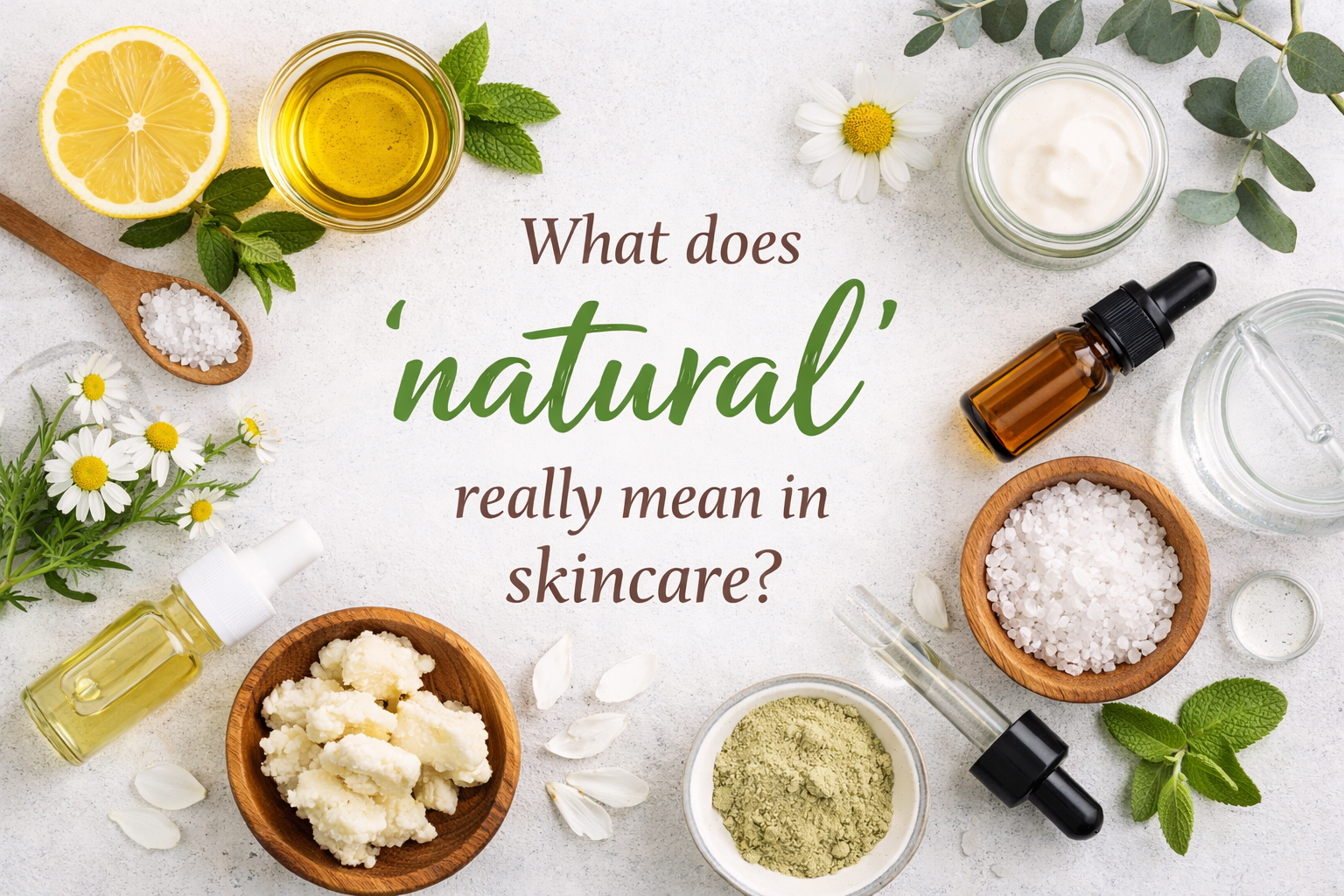

In skincare, the term ‘natural’ can mean different things to different people, and there is no single agreed definition of what ‘natural’ means when it comes to skincare. So what is ‘natural’? Well, really, that’s up to you. It depends on what you want it to mean and what you accept as ‘natural’. For some, it may mean 100% pure botanical ingredients. For others, 95% may feel natural enough. Yet others will consider naturally derived but chemically modified ingredients as natural enough for them.
So, how do you know if a product labelled ‘natural’ is your kind of ‘natural’?
Well, it’s not a simple task. For starters, you have to understand the ingredients list, and even then you may not know if an ingredient is natural or synthetic.
That starting point comes with its own problem. First, you have to translate each ingredient from its INCI ( International Nomenclature of Cosmetic Ingredients, pronounced ‘inky’) name into its common name. Then you have to decide whether each ingredient is natural enough for you. And even then, you may not actually know whether an ingredient is naturally derived or synthetically produced.
I know! This probably isn’t the answer you were expecting!
And the confusion does not end there. Some skincare formulators and consumers will only accept ingredients that have not undergone heat or chemical processing and remain in their ‘virgin’ state, a kind of “from field to bottle” philosophy. This would include ingredients such as cold-pressed oils, for example. This would be a purist view of ‘natural’.
Others, however, will take a more pragmatic approach and accept that a raw botanical ingredient often has to undergo some sort of processing or modification, whether through heat, fermentation, hydrolysis or solvent extraction, in order to become a usable cosmetic ingredient. This is especially common in water-based products, which often rely on more functional ingredients such as emulsifiers or solubilisers that cannot be used straight ‘out of the plant’.
Yet others will also accept nature-identical ingredients. These ingredients are synthetically produced to mimic their natural counterparts. It may sound like a bit of a ‘no-no’ at first, but take citric acid for example. There are only so many lemons in the world after all, and it is hardly sustainable to squeeze enough lemons to produce the 2.8 million tons of citric acid each year to meet global demand. So, citric acid is usually produced synthetically through industrial fermentation. For some formulators, it becomes a question not simply of whether something is natural, but whether sourcing it naturally is practical or sustainable.
If this topic has caught your interest, you might want to listen to the Green Beauty Conversations podcast, Episode 1: ‘What Does Natural Skincare Mean?’
And what about ‘organic’?
It is worth noting that ‘natural’ and ‘organic’ are not the same thing. Unlike ‘natural’, organic claims are tied to certification standards. The rules are more stringent and, as a general rule of thumb, certified organic products are expected to contain a very high proportion of organic ingredients. However, even then there is no fixed requirement for a 100% organic composition.
So how do you know if what you are buying is ‘natural’?
If you want to know if a product fits your kind of 'natural', here are a few things to look out for:
- Check the ingredient list: you may already be familiar with some of the natural ingredients listed; others you may need to look into. Do not be put off by long, chemical-sounding names. Many natural ingredients still sound 'chemical' on a label, because plants and other natural materials are made up of naturally occurring chemical compounds.
- Research the unfamiliar ingredients: you can use an ingredient-checking app to help decode the INCI names, or do a simple online search to find out whether an ingredient is natural or synthetic and whether it fits with your definition of ‘natural’.
- Look beyond front-label claims: terms such as “natural”, “naturally derived” or “made with natural ingredients” can mean different things. It’s always worth checking the ingredients list to see what is actually in the product.
- Look for certifications: labels such as COSMOS or NATRUE can be a helpful indicator of a high proportion of natural or organic ingredients. However, they do not necessarily mean a product is 100% natural. At the same time, just because a product is not certified as ‘natural’ or ‘organic’, it does not necessarily mean that it isn’t.
- Research the brand: many natural skincare brands are transparent about their sourcing and ingredient choices.
- Ask questions: smaller independent brands in particular are often happy to engage with customers.
And what about LEORA? What is LEORA’s approach to ‘natural’?
At LEORA we take a pragmatic approach, while always seeking to stay as close to nature as possible. LEORA will, as much as is practically possible, use organic ingredients, give preference to cold-pressed oils and unrefined butters, and source its ingredients from reputable UK and EU suppliers. LEORA will seek to use ingredients that preserve the most natural origin of the product, while taking practicality, sustainability and ingredient sourcing into account.
What about your kind of ‘natural’? Is your approach purist or pragmatic?
Let me know what ‘natural’ means to you. I’d love to hear from you. You can email me or leave a comment below.